Police Raids Under Scrutiny as INDECOM Exposes Troubling Trends
The Independent Commission of Investigations (INDECOM) has raised serious concerns about Jamaica’s police operations, revealing a disturbing pattern in which women are often removed from homes just moments before fatal shootings occur. The findings, released in a new Special Investigative Report on Planned Police Operations, point to deeper issues in law enforcement practices, including the misuse of search warrants, missing body camera footage, and questionable evidence handling.
A Disturbing Pattern in Fatal Police Raids
INDECOM’s report indicates that in nearly one out of every five planned police raids resulting in a civilian death, a female occupant of the home is either escorted away or prevented from entering just before officers open fire.
This recurring scenario, the commission says, has become a defining feature of fatal police encounters — raising questions about accountability, transparency, and truthfulness in official accounts of “shootouts.”
The report also highlights consistent failures such as officers tampering with CCTV systems, failing to activate body cameras, mishandling weapons and evidence, and using outdated or invalid search warrants.
Rising Death Toll and Lack of Transparency
Between January and September 2025, INDECOM recorded 233 civilian deaths resulting from police actions, with no month reporting fewer than 20 fatalities. April was the deadliest month, with 30 civilians killed, while September saw 22.
These numbers mark a continued upward trend: 127 deaths in 2021, 134 in 2022, 155 in 2023, and a staggering 189 in 2024. Of the 67 officers investigated this year for excessive force, 49 have been charged with murder.
Despite being planned operations, only one of the fatal incidents in 2024 involved an officer wearing a body camera — and that device was switched off at the time. The officer claimed he had “forgotten to reactivate it” after using the restroom.
INDECOM noted five additional non-fatal incidents where officers offered the same excuse, calling the explanation “unacceptable,” especially in premeditated raids. The commission stressed that failing to record such operations “undermines the constitutional duty to protect citizens’ lives and ensure credible evidence.”
Witnesses Removed Before “Shootouts”
INDECOM’s findings also shed light on troubling witness removal tactics. In one 2023 case, police reportedly arrived at a home where a woman answered the door while a man — who was out on bail — stood behind her. Officers said the woman “chose to leave the property to urinate” moments before the man allegedly pulled a firearm.
However, the woman’s testimony painted a very different picture. She said police pulled her from the house onto the verandah before one officer pointed a rifle inside and opened fire.
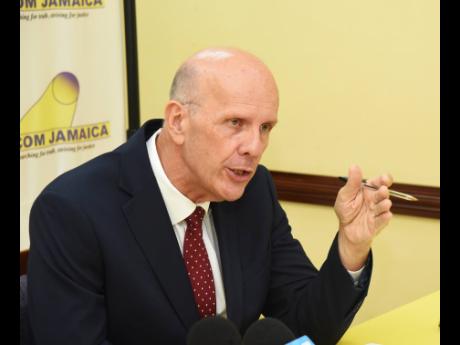
“These cases reveal frequent contradictions between police and civilian testimonies,” said Assistant Commissioner Hamish Campbell. Of the 108 planned police operations (PPOs) reviewed between 2022 and 2024, about 31% contained conflicting witness statements, he noted.
Faulty Warrants and Outdated Laws
The investigation also uncovered alarming inconsistencies in how search warrants are issued and executed. Out of the 108 fatal operations examined, only 77 were backed by search warrants, while 31 had none at all. Even more concerning, 18 warrants cited outdated laws, including the Firearms Act of 1967 and the Gunpowder and Explosives Act of 1925.
“The correct legal authority for firearms-related searches has existed under Section 91 of the Firearms (Prohibition, Restrictions and Regulations) Act 2022,” Campbell emphasized.
Yanique Taylor-Wellington, INDECOM’s Director of Complaints, explained that such errors might stem from a lack of proper training among officers or Justices of the Peace who authorize the warrants. She added that unlike the United States — where illegally obtained evidence is typically inadmissible — Jamaican courts still accept evidence gathered through faulty warrants.
Questionable Evidence in Fatal Encounters
INDECOM’s analysis also revealed inconsistencies in weapon use. In 50 of the 108 cases, the alleged illegal firearm found near the deceased had not been fired, despite claims that it was pointed at officers. In the remaining 58 cases, police reported that suspects fired first — yet no officers were killed or critically injured.
These patterns, the report suggests, call into question the authenticity of several police reports and the integrity of post-incident evidence collection.
INDECOM’s Key Recommendations
To address these systemic issues, INDECOM outlined several urgent reforms:
- Senior Oversight: Every planned operation should be led by an officer of inspector rank or higher. Junior officers should not lead “snap raids.”
- Valid Search Warrants: All searches or arrests in private homes must be supported by legitimate, up-to-date warrants unless legally exempted.
- Warrant Legibility: Justices of the Peace should include both the time and date on warrants, and their names must be clearly identifiable.
- Proper Detainee Handling: Individuals detained during searches should be restrained to prevent access to firearms or other weapons.
INDECOM reiterated that these measures are essential to restoring public trust in law enforcement and ensuring the protection of citizens’ constitutional rights.