Wolves’ Identity Crisis on Display During Loss to Lakers
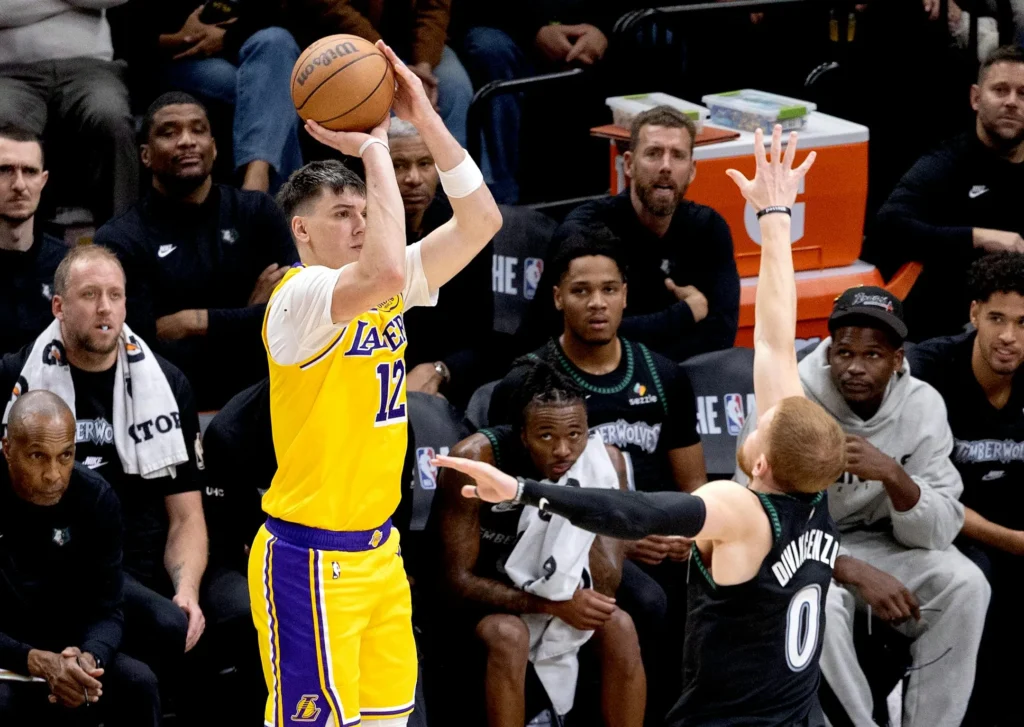
In Wednesday night’s game at Target Center, the Lakers led the Timberwolves 105–89 late in the fourth quarter. One fan’s shout—“Who is No. 12?”—sparked a wry response from injured Wolves star Anthony Edwards: “That’s what I’m saying! I don’t know.” The player in question was Jake LaRavia, who torched Minnesota with an efficient 10-for-11 shooting night, scoring 27 points.
While humorous on its face, the moment symbolised a deeper, growing concern: Minnesota seems to lack clarity about who it is on the court.
LaRavia’s Scorching Night Highlights Wolves’ Weaknesses
- LaRavia’s efficiency: 10-for-11 shooting and 27 points is a step-up performance in a game many thought the Wolves should dominate.
- Missing stars, misplaced confidence: The Lakers were without LeBron James and Luka Doncic, yet took control anyway. Meanwhile the Wolves, playing at home and expected to win, appeared complacent for large stretches.
- Collapse before rally attempt: Minnesota trailed badly, then fought back late—only to fall short after Austin Reaves hit a game-winning floater at the buzzer.
These elements reflect more than one game lost. They expose a deeper uncertainty within the roster about how to consistently perform without relying on late-game heroics.
From Last Season’s Surge to This Year’s Struggles
Last season, Minnesota went through a rough patch early (8–10) but clawed its way to a late surge, finishing strong enough to reach the Conference Finals—including a notable win over a Luka-and-LeBron-led Lakers squad.
Many expected that momentum and continuity to carry into this season—after all, much of the same core remains. Yet early results tell a different story. Rather than building on what worked before, the team appears to be searching for itself again.
A sense of drift has replaced the cohesion that powered their late-season run.
Why the Wolves’ Identity Feels Lost
Complacency vs. Focus
Minnesota’s performance showed moments of overconfidence. Facing a depleted Lakers squad, they seemed to assume victory rather than earn it. That mindset allowed LaRavia—and the Lakers bench—to dominate.
Leadership Gap
With key contributors either injured or elsewhere, the team lacks consistent leadership on the floor. Even when star players return, the burden falls on supporting cast and coaching to define the team’s culture and expectations.
Rebuilding Momentum Too Slowly
The win-now push that carried Minnesota last season may have masked underlying gaps in defensive discipline and consistency. Without addressing those, each new game feels fresh instead of building toward a unified identity.
What Needs to Shift Moving Forward
- Define on-court identity
- Who plays with urgency and purpose from start to finish?
- Which stylistic DNA—defense, pace, effort—will the Wolves lean on this season?
- Establish leadership beyond stars
- With Anthony Edwards sidelined at times, others must step forward.
- Coaching must enforce tone and standards, not let expectation replace execution.
- Translate last season’s momentum into habits
- Mentality matters: late-game comebacks are thrilling, but shouldn’t be relied upon to paper over recurring weaknesses.
- Early-season results should feed collective identity, not drift into inconsistency.
Conclusion
Minnesota’s home loss to the Lakers wasn’t just about blown defensive assignments or cold shooting nights—it spotlighted a deeper issue. The Wolves don’t yet seem fully sure who they are.
A team that nearly reached the NBA Finals last season now seems to carry expectation without clarity. If Minnesota is to build sustained success this year, its next task isn’t just to win games—it’s to define what it means to be the Wolves on the court.